abhishek ads

Wednesday, 8 June 2011


Could this be the GSM version of HTC EVO 3D?

HTC showcased the EVO 3D back in March, which was their first phone capable of recording images and videos in 3D. That phone, however, was intended for Sprint’s CDMA network. But HTC may just have a GSM version of the EVO 3D up its sleeve.

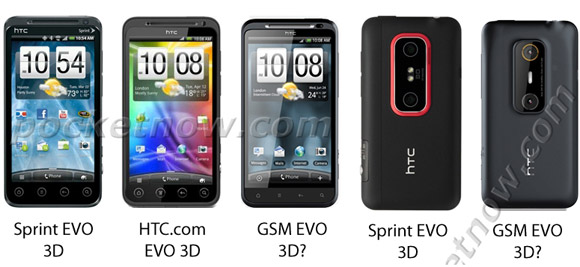
Pocketnow.com came across these images on HTC’s website. The one on the extreme left is the one that they initially announced, the one in the middle that was put up on HTC’s website but later pulled and the last one that appeared on HTC’s developer website and the one that we are going to talk about.

Notable differences between this and the others include a lack of circles around the keys below the display, which were exclusive to the HTC phones on Sprint's network. Along the side, the volume control button, camera shutter button and the 2D/3D mode switch have been redesigned. On the back the camera lenses don’t have the red surround and the window for the LED flash has a different design.

It’s also running an older version of Sense but if you look carefully at the icons you can see that it’s because the screen does not belong to the phone but it’s just pasted there from some other HTC phone. The EVO 3D has a qHD display which makes the icons look smaller with more gaps between them as is evident from the other two phones but this one looks more like the one on phones running WVGA screens.

All this point toward the fact that this slightly redesigned handset might just be the GSM version of the EVO 3D. If this is true it won’t be the first time HTC has done this. They created GSM versions of existing CDMA phones before, for example, the Desire HD is virtually a clone of the EVO 4G. Perhaps this could be the Desire 3D?
Cheap iPhone Nano to 'launch in 6-18 months', says analyst


Apple will enter the mid-range phone market in the next year and a half, a market analyst predicts, as it looks to head off the challenge from keenly priced Android smartphones.

According to Peter Misek of Jeffries, checks his company have conducted “increasingly point to a launch [of a low-cost iPhone] within the next 6-18 months”.

Misek claims that the handset, which tech types have provisionally dubbed the iPhone Nano, could sell for as little as $300 (not much shy of £200 ) while still allowing Apple to maintain a respectable profit margin.

Rumours that Apple would shed its ‘premium product at a premium price’ policy in favour of a more inclusive, mass market approach to smartphones have been rife for years.

However, they have gained fresh momentum in recent months, as Android has usurped Apple’s iOS operating system as the world’s largest smartphone platform as measured by shipments in the last quarter.

The unofficial ‘Nano’ sobriquet stems principally from the fact that the cheaper phone is expected to be a more compact bit of kit than earlier iPhone iterations. To keep costs down, Apple is rumoured to be planning to recycle components from earlier iPhones.

Sony Ericsson ST18i Urushi leaks again, pics galore

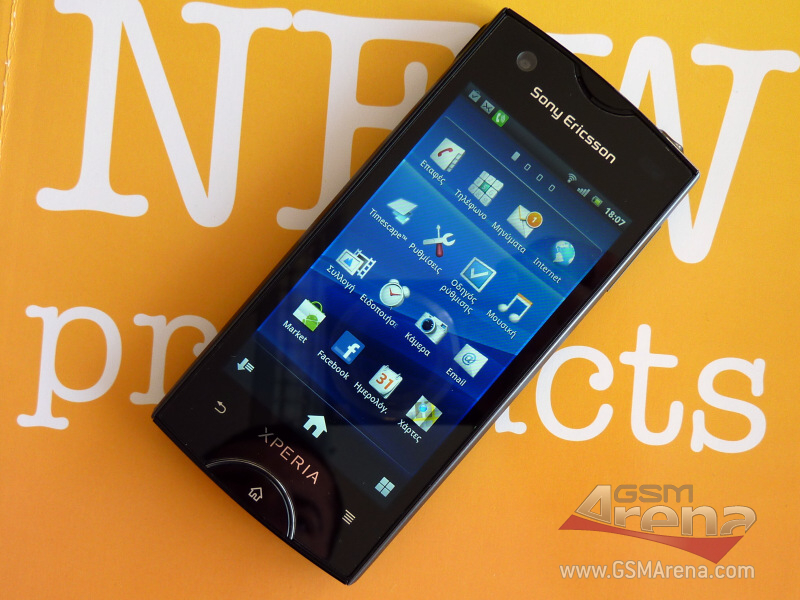
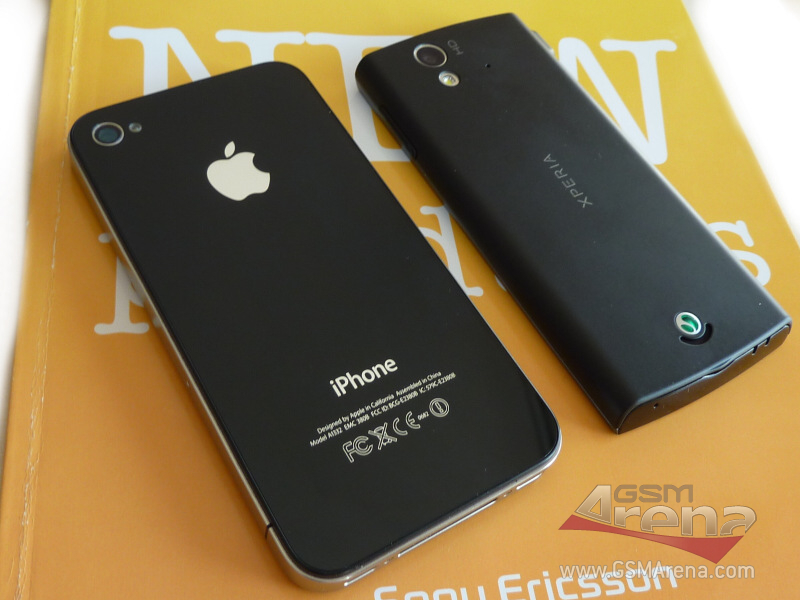
Sony Ericsson is preparing a new intriguing smartphone – the ST18i codenamed Urushi. It’s expected to be a smaller version of the Arc, running on the same hardware but packing a smaller 3.2-inch display.
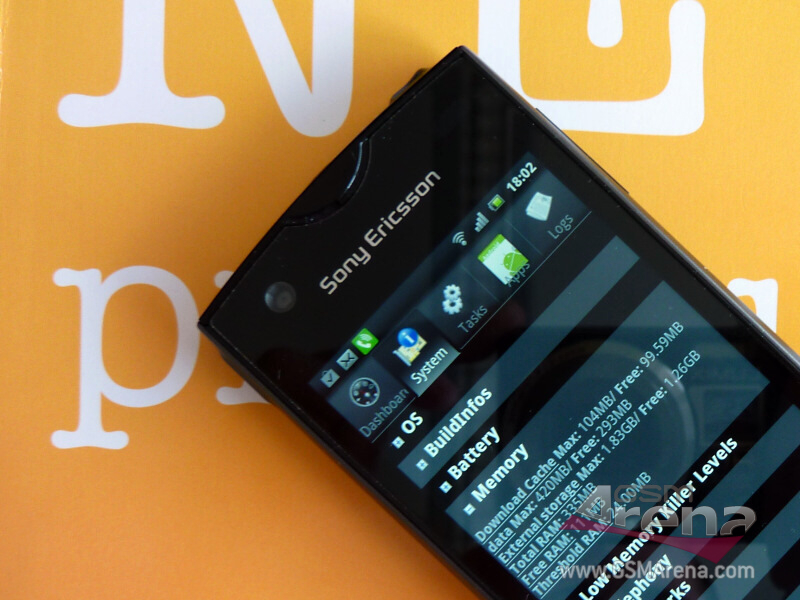
Today we got a batch of photos of an upcoming Sony Ericsson device – the previously leaked ST18i. According to our tipster, its codename is Urushi and it runs on the same hardware as the Xperia Arc – a 1GHz Snapdragon chipset with a Scorpion CPU and an Adreno 205 GPU.
The Urushi’s display is a 3.2-inch display with the whopping resolution of 854x480 pixels and the proprietary Bravia Mobile engine. The phone runs Android 2.3.3 Gingerbread with the typical Sony Ericsson customizations and has the same camera as the Xperia Arc - an 8 megapixel snapper with 720p recording and a LED flash.
The handset is supposed to launch in September. We guess the official announcement should happen soon.

Acer Windows Phone 7 handset revealed


Acer has officially unveiled its first ever Windows Phone 7 smartie, the imaginatively named W4, at the Computex expo this week.

It will be the first handset from the Taiwanese computer maker, which has only recently been revealed by Microsoft as the latest company to get onboard the growing family of Windows Phone 7 manufacturers, to run the upcoming Mango OS refresh.

Standout features include a reasonably-sized 3.6-inch WVGA touchscreen with 480 x 800 resolution, a five-megapixel rear-mounted snapper with autofocus, a 1GHz Qualcomm MSM8255 chip to keep things running buttery smooth and 8GB of internal storage apps, multimedia and whathaveyou.

It’ll also sport range of connectivity options including Wi-Fi and Bluetooth. But more importantly it'll have DLNA support too, which means it will be able to stream content wirelessly onto other DLNA supported devices.

No word yet on when the handset will drop or if it will even go on sale in these shores. The Mango update is due for rollout this autumn, though, so it’ll most likely be a Q3 release.

Sony Ericsson Xperia Pro UK preorder price revealed


Sony Ericsson (SE) has unveiled the pre-order price for its relatively under-hyped Xperia Pro Android smartie, for just a penny shy of £350.

Despite being announced at the same time as the Xperia Play and the Xperia Neo back in February at the Mobile World Congress - both of which have since hit store shelves - we haven’t heard so much as a pip from SE regarding the Pro. Until now that is.

The London based Japanese-Swedish venture has quite unexpectedly updated the Pro’s information page on its online store with a UK price set at a rather reasonable £349.99.

According to the site, the handset will be in stock this month but gives no specific date, although it can be pre-ordered right away.

Standout features include a 3.7-inch TFT display with Mobile BRAVIA Engine technology and scratch-resistant coating, a 1GHz Qualcomm Snapdragon MSM8255 and an eight-megapixel snapper with an Exmor R sensor, LED flash, autofocus, image stabilisation, geotagging and HD recording to boot.

Sliding action

It is also home to a slide out QWERTY keyboard that takes advantage of a so-called Type and Send feature for fast messaging, and Smart Keyboard text prediction software that’s triggered automatically when the keyboard is slid open.

Elsewhere there is Android 2.3, aka Gingerbread, which comes topped with SE’s bespoke UI and preinstalled with an array of Google’s main apps and services.

Connectivity options include Wi-Fi, Bluetooth with A2DP and USB, as well an HDMI port and DLNA support for streaming HD content onto other devices. Internal storage is a paltry 320MB but can be expanded by up to 32GB via the microSD slot.

For that price it seems like a no-brainer to us if you’re in the market for a brand new smartie. Contract prices have yet to be announced so if you’re not of mind to pay the full amount from the get-go, stay tuned for more information.

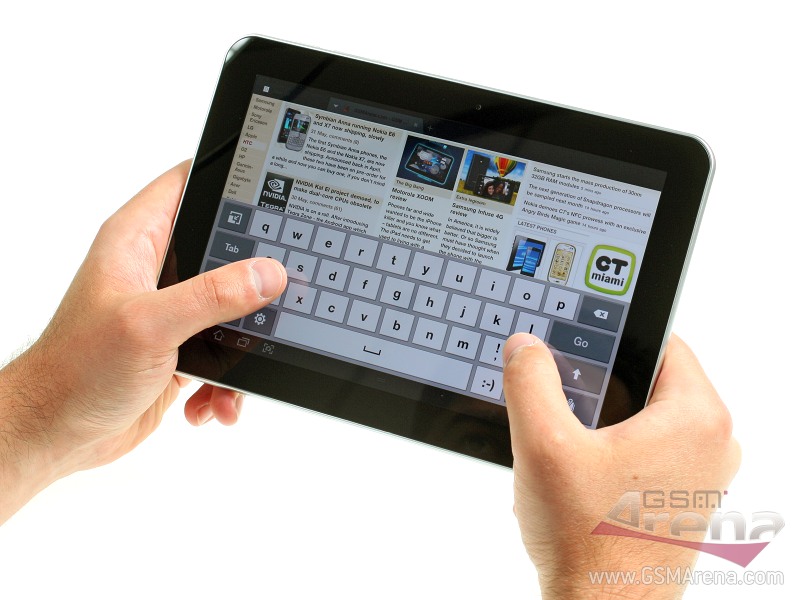
Samsung Galaxy Tab 8.9 comes to the office, makes calls


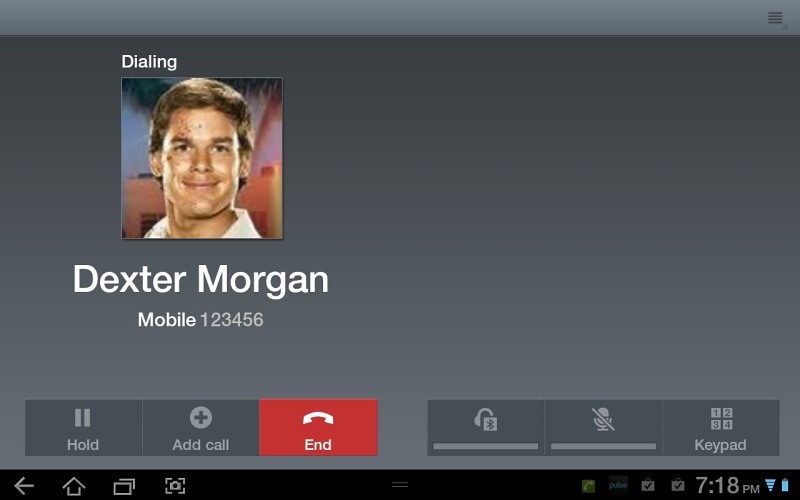
The Samsung Galaxy Tab 8.9 has just arrived in our office and, boy, do we have some news for you. It turns out that the Honeycomb slate takes on from where its 7” predecessor left off, and brings native telephony capabilities to an even larger form factor.

Yeap, we are talking regular GSM network phone calls and even some video-calls if you wish. There’s no dialer on board, but you can either get a 3rd party app from the market (as we did), or use your contacts list for initiating calls.

Much like with the 7” Galaxy Tab, you can either use the built-in microphone and speakerphones, a handsfree plugged into the 3.5mm audio jack, or a Bluetooth handsfree for calling. Pretty cool, eh?

But of course telephony is not why people would go for the Galaxy Tab 8.9. The reason why people would probably choose the ultra-slim tablet is the great mix of portability and functionality that it offers. Despite being as powerful as its larger competitors, the Galaxy Tab 8.9 comes in a shell that’s way more portable and easier to handle (due to the reduced weight and unbelievably slim waistline).
Anyway we shouldn’t be getting ahead of ourselves here. We’ll see if the Galaxy Tab 8.9 will manage to live up to the high expectations when the review is created

Apple confirms iOS 5 & iCloud for June 6th, no iPhone 5?


The new iteration of Apple’s iPhone and iPad operating system and its much talked-about cloud services offering will be officially unveiled to the world next month, the tech giant has revealed.

Seasoned Apple watchers will know that the company never ever gives advance notice of what its press events will bring the world. Typically all we're usually given to go on is a cryptic press invite, which may or may not contain clues about the products about to be showcased.

So it’s somewhat seismic that Apple has today issued a release telling us exactly what’s due on June 6th at the Worldwide Developers Conference and that Steve Jobs will be centre stage as compere.

Perhaps tellingly, however, there’s no mention of the iPhone 5, which is normally the star of Apple’s June beanos. That’s led to some to speculate that rumours of a delay were bang-on. Although for our money, it could just mean that Apple may just be keeping schtumm to at least retain a smidgeon of its mystique and stoke further speculation about the phone over the next week.

Details of what iCloud offers remain very thin on the ground right now. But according to Tech Crunch, its key features include an all-new, Android-style notification system and interactive widgets.

Asus unveils Padphone droid with tablet dock, MeMO 3D tablet


At Computex, Asus announced a phone with half a tablet and a tablet with half a phone. The Padphone that leaked earlier today is official, although its specs haven’t been finalized yet and then there’s the MeMO tablet with a glasses-free 3D screen and phone-like Bluetooth gadget.

Leaked photos of the Asus Padphone barely entered the rumor mill and it’s already official (this happens a week after the initial teaser). Asus showed only a mockup at Computex as the design for the gadget hasn’t been finalized yet.

Here’s the deal (if the name hasn’t given it away yet) – it’s an Android phone with 4.3” screen that inserts into a 10.1” tablet. Not much is clear about the Padphone, aside from Asus hinting it will run Ice Cream Sandwich, which makes sense since that’s the Android version that is supposed to unify the phone and tablet Android branches.

Anyway, the tablet is just a dock – it displays the phone’s UI on its bigger screen and provides a big battery, speakers and some extra ports. The phone has a microHDMI and microUSB ports that hook up to the tablet to output the screen image and charge the phone and there’s a 5MP camera on the back (with a hole at the back of the tablet dock so that you can still take photos).

Here are a couple of promo videos that show the Asus Padphone (computer generated) action (remember it’s still at the mockup stage).
Hey wait, was that Internet Explorer 8 on the tablet dock’s screen on this second video (1:36)? What?

We’ve already seen a netbook dock for an Android phone (Motorola’s Atrix and dock) and Asus’ own Transformer tablet sort of turns into a netbook with its keyboard dock. Now the Asus Padphone is another variation on the theme. Asus say it should be out for Christmas and judging by the Transformer’s price tag, there’s a chance it will have a decent price too.

Next up is the Asus Eee Pad MeMO 3D. It’s a 7” Android tablet with a glasses-free 3D IPS display with 1280 x 800 pixels resolution. Sounds impressive, doesn’t it? It reportedly runs Android Honeycomb on a 1.2GHz dual-core Qualcomm CPU. Unlike the Padphone, Asus showed an actual working prototype.

Here’s the deal though – there’s a Bluetooth remote that can control the MeMO 3D and you can actually take calls on it like a phone. It’s got a transparent screen too, to increase the “cool” factor. Of course, if you want to use the remote (called “MeMIC”) as a phone, the MeMO 3D will have to be in Bluetooth range (10m at best).